Martha’s Vineyard has apparently upped its presidential pedigree.
Former President Barack Obama and Michelle Obama have purchased a seven-bedroom, nine-bathroom home in Edgartown, Massachusetts, according to reports. The price for the 29-acre estate was $11.75 million, public records show.
The property was purchased by a trust represented by attorney Ronald Rappaport, a partner at Reynolds, Rappaport, Kaplan and Hackney, according to records made available Wednesday. The trust is reportedly tied to the Obamas, but Mansion Global could not confirm the connection.
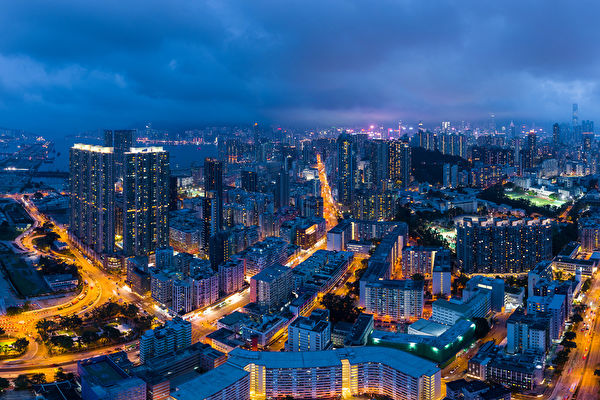
Hong Kong's top 10 expensive homes
By Time Out Hong KongPosted: Wednesday 25 May 2016
1.The Redhill
Peninsula, Tai Tam Asking: $880m (2014) Shot of houses sprawled along Tai Tam
coastline Introducing the most expensive house in Hong Kong – and it’s currently
on the market. For the outrageous price, you can grab this 3,013sq ft Tai Tam
townhouse, complete with its four bedrooms, a powder room, three bathrooms, a
maid’s room, a garden, a fitted kitchen, a terrace and, of course, the
quintessential car park.
2.10 Skyhigh, Pollock’s Path, The Peak Sold: $800m
(2011) Money ain’t a thang, just look at my pinky ring – this is the most
expensive residential property ever sold in Hong Kong. Located on Pollock’s
Path, a road last year ranked as the most expensive street in the world, the
8,300sq ft house at 10 Skyhigh – a joint venture between film doyen Stephen Chow
and Ryoden Development – sold in 2011 to an undisclosed owner for a whopping
$800m.
3. 8, 28 Barker Rd, The Peak Sold: $740m (2013) Most pricy investments
require the involvement of a bank. But not for Chinese lawyer Raymond Li, the
owner of this Peak property, who paid $740 million, mostly in cold, hard cash
(in suitcases, we wonder?). At three storeys and 6,863sq ft, it includes five
bedrooms, two car parks and a rooftop pool with an outstanding view of Victoria
Harbour. It has it in spades over the 6,847sq ft House 7, which wealthy
philanthropist Qian Fenglei bought for $690m, with a 1,822sq ft garden to boot.
Bargain.
4. 3 Gough Hill Rd, The Peak Sold: $650m (2013) In 2013, this 5,145sq
ft villa became the third most expensive home in Hong Kong, after garment
exporter Peter Law Kin-sang sold the property for $650 million in what some have
called 2013’s most notable deal in the luxury residence market. The price
translates to a ridiculous $126,336 per square foot!
5. 8 Pollock’s Path, The Peak Sold: $580m (2011)
It’s no wonder European diplomats love The Peak – the temperate region must remind them of their digs back home. This patch of land used to belong to the former French Consulate and commands views over Hong Kong
Island and Victoria Harbour. It’s a grade II historic building, measures
11,222sq ft and was sold at an average of $51,684 per square foot.
6. House 3, 28 Barker Rd, The Peak Sold: $538m (2013) Real estate agents know their property
– particularly Vivien Chan, the chairwoman of the Estate Agents Authority, who
owns this piece of prime real estate on Barker Road. This residence in the
seven-storey building measures in at 5,706sq ft and sold for $538m just last
year.
7. 11/F, Opus, Stubbs Rd, Mid-Levels Asking: $470m Hong Kong's Top 10
Expensive homes - Shot of Stubbs, Mid Levels This apartment in the famed
Frank-Gehry-designed Opus hit headlines last year for the price it couldn’t
attract: $470m. If it had sold at this price, it would have made the 5,409sq ft
space the most expensive apartment in the city per square foot – a record
currently held by, you guessed it, another apartment in Opus, which sold for
$455m in 2012.
8. 66/F, 39 Conduit Rd, Mid-Levels Sold: $360m (2011) Hong Kong's
Top 10 Expensive homes - View of Central from Conduit Rd, Mid-levels While
Conduit Road might only be the second-highest road in Western Mid-Levels, this
66th floor apartment takes you way up into the clouds. In fact, it is the
tallest building in the area with glorious views of Victoria Harbour. With 24
units up for sale, the 5,636sq ft Unit A sold the highest for $360.7m back in
2011.
9. Sky House, The Arch, West Kowloon Sold: $226m (2008) Hong Kong's Top 10
Expensive homes - The Arch, Kowloon Hey, it’s Kowloon’s most expensive property!
This 5,497sq ft West Kowloon apartment includes the Moon Tower penthouse and the
rooftop – essentially, a two-storey pad with a decent view of the moon too.
Selling at a mere $41,125 per square foot, it also shows that Kowloon is where
the value is at. 10. 51/F, Branksome Crest, Mid-Levels Sold: $203m (2010)
Top leaders of China’s Communist Party have relatives who own assets in Hong Kong;
HONG KONG — Li Qianxin, the elder daughter of the Chinese Communist Party’s No. 3 leader, has quietly crafted a life in Hong Kong that traverses the city’s financial elite and the secretive world of Chinese politics.
For years, she has mingled with senior executives of state companies through Hong Kong and mainland professional clubs known for grooming the sons and daughters of officials. She has represented Hong Kong in Chinese provincial political advisory groups. She is the chairwoman of a state-owned investment bank based in Hong Kong that has long done business with the relatives of top Chinese officials.
Ms. Li, 38, also has deep financial roots in the city, having bought a $15 million, four-story townhouse perched high above a beach. Her partner owns a now-retired racehorse and spent hundreds of millions on a stake in the storied Peninsula Hotel that he later sold.
Ms. Li and other members of the Communist nobility are embedded in the fabric of Hong Kong’s society and financial system, binding the former British colony closer to the mainland. By building alliances and putting their money into Hong Kong’s real estate, China’s top leaders have inextricably linked themselves to the fate of the city.
The law could protect the families of the party’s leaders by stopping the protests that wreaked havoc on the economy, or leave them vulnerable by driving down business confidence in the territory. It could also expose them to sanctions.
Already the law has prompted rebukes from foreign countries that could threaten Hong Kong’s access to the global financial system. The Trump administration imposed sanctions on Friday on Hong Kong’s chief executive, Carrie Lam, and 10 other senior officials in the city and the mainland they accuse of curtailing freedoms in Hong Kong.
“Members of the Red aristocracy in China, including the princelings, have made huge investments in Hong Kong,” said Willy Lam, an adjunct professor of China studies at the Chinese University of Hong Kong. “If Hong Kong suddenly loses its financial status, they cannot park their money here.”
Qi Qiaoqiao, the older sister of Xi Jinping, China’s president, started buying properties in Hong Kong as early as 1991, Hong Kong property records show. Her daughter, Zhang Yannan, owns a villa in Repulse Bay, which she bought in 2009 for $19.3 million, and at least five other apartments, the city’s property and company records indicate.
Wang Xisha, a former Deutsche Bank executive who is the daughter of Wang Yang, the No. 4 party leader, bought a $2 million home in Hong Kong in 2010, according to city property records.
The Communist Party has long been secretive about the riches of many of its leaders’ relatives, aware that such an accumulation of wealth could be seen as the elite abusing their privilege for personal gain. In Hong Kong, the party is also mindful that the presence of princelings could further fan resentment of Beijing.
Ms. Li, like many relatives of top Chinese officials, keeps a low profile.
In the mainland, there are few mentions of Mr. Li’s family in the party-controlled news media, and searches for his daughter’s name on social media sites yield minimal results. A trip to Nangoucun, his ancestral village in northern Hebei Province, offered little insight about his children.
But internal documents from Deutsche Bank obtained by the German newspaper Süddeutsche Zeitung and reviewed by The New York Times late last year referred to a woman with the same name in English and Chinese as the elder daughter of Li Zhanshu, now the No. 3 leader in China. Those documents were part of an internal inquiry stemming from an investigation by the Securities and Exchange Commission into the bank’s politically connected hires.
A well-connected businessman and an associate have confirmed that the Ms. Li who is an executive at China Construction Bank International is the daughter of Li Zhanshu, as does a biography of the official written by Cheng Li, an expert on elite Chinese politics at the Brookings Institution.
The rest of her résumé can be pieced together through news snippets and archived web pages. They showed how Ms. Li has strengthened her ties to the city in ways that position her well for a political career in the mainland.
She joined networks like the Hua Jing Society in Hong Kong that provide a forum for princelings to meet the children of Hong Kong’s tycoons and political class.
In 2013, she and other Hong Kong representatives of the Chinese People’s Political Consultative Conference, or C.P.P.C.C., a party-run political advisory group, helped organize relief funds for a village. Two years later, she visited farmers and carried toddlers in the same province to promote the United Front Work Department, a party unit that develops overseas political networks.
Ms. Li is now the chairwoman of China Construction Bank International, the investment arm of a major state lender, according to corporate records in Beijing. Ms. Li, her partner and the bank have not responded to multiple requests for comment from The Times.
“There is often an assumption that simply being well connected is enough to get ahead in Chinese politics,” said Rana Mitter, a professor of Chinese history and politics at Oxford University, who did not comment specifically about Ms. Li. “Actually, there is still a great deal of interest in candidates proving themselves for higher office in institutions such as the Communist Youth League and the C.P.P.C.C.”
She bought the waterfront townhouse overlooking Stanley Beach through Century Joy Holdings Ltd., a company registered in Hong Kong and incorporated in the British Virgin Islands, for $15 million in 2013, according to a document filed with the city’s land registry.
Ms. Li, then 30, was the Hong Kong entity’s sole director. That entity was dissolved in October, hours after The Times contacted Ms. Li for comment ahead of the publication of the article about Deutsche Bank’s hires in China.
Her partner, a 35-year-old Chinese-born Singaporean businessman, Chua Hwa Por, has used a similar strategy.
The nature of Ms. Li’s relationship with Mr. Chua is unclear, but they own a company together and have used the same home addresses in documents they have filed with Hong Kong’s property and company registries. Hong Kong news reports have speculated that the couple were married.
That year, he also started to make a number of major purchases, according to filings with the Hong Kong Stock Exchange. He took over Tai United, a little-known investment company listed in Hong Kong, using it to buy trophy assets including a large stake in the Peninsula Hotel and the 79th floor of an iconic skyscraper.
In July 2017, barely five months after he was appointed chairman of Tai United, Mr. Chua resigned from the company. He stepped down shortly after Next Magazine, a Hong Kong news outlet owned by the pro-democracy tycoon Jimmy Lai, reported on the purchases and his possible ties to Mr. Li, the senior Chinese official. (The publisher, Mr. Lai, was arrested this week, accused of national security and other offenses.)
Mr. Li, the official, was at the time poised for a promotion to the Politburo Standing Committee, the apex of party power, and even the whiff of corruption in his family would have been potentially damaging. In January the next year, Mr. Chua sold the bulk of his stake in Tai United.
Without public disclosure of the wealth of officials and their relatives, it is impossible to know how Mr. Chua and Ms. Li obtained their income. There are legitimate reasons for people to own companies offshore, and it is also not illegal for Chinese citizens to do so.
Shirley Yam, a prominent financial writer in Hong Kong, also raised questions about the couple’s financial dealings in a 2017 column in The South China Morning Post, a local newspaper owned by Jack Ma, one of China’s richest tech tycoons.
Since then, Mr. Chua has largely shied away from the public eye. But he and Ms. Li remain joint owners of a company called Chua & Li Membership. In annual filings with the government, both had listed the $15 million beach house as their residence until earlier this year, when Ms. Li changed her address to an apartment owned by Mr. Chua on the 60th floor of an exclusive property.
She applauded alongside the Hong Kong leader, Mrs. Lam, at the opening of a government-backed exhibition promoting national security for Hong Kong, a promotional video for the event showed. Other special guests included the deputy commander of the People’s Liberation Army in Hong Kong and the directors of the highest offices representing mainland authorities in Hong Kong.
Three top leaders of China’s Communist Party have relatives who own assets in Hong Kong, including more than $51 million in luxury real estate, a New York Times investigation shows. New York Times )
Treasury Sanctions Individuals for Undermining Hong Kong’s Autonomy
WASHINGTON – Today, the Department of the Treasury imposed sanctions on 11 individuals for undermining Hong Kong’s autonomy and restricting the freedom of expression or assembly of the citizens of Hong Kong.
These actions were taken pursuant to Executive Order (E.O.) 13936, “The President’s Executive Order on Hong Kong Normalization,” which President Trump issued on July 14, 2020. E.O. 13936 declares a national emergency with respect to the situation in Hong Kong, including recent actions taken by the People’s Republic of China to fundamentally undermine Hong Kong's autonomy and democratic processes, and provides for the imposition of sanctions on actors engaged in these malign activities. E.O. 13936 also builds on and implements provisions of the Hong Kong Human Rights and Democracy Act of 2019 and the Hong Kong Autonomy Act of 2020.
The recent imposition of draconian national security legislation on Hong Kong has not only undermined Hong Kong’s autonomy, it has also infringed on the rights of people in Hong Kong, allowing mainland China’s security services to operate with impunity in the region, mandating “national security education” in Hong Kong schools, undermining the rule of law, and setting the groundwork for censorship of any individuals or outlets that are deemed unfriendly to China.
Today, Treasury is sanctioning Carrie Lam, Chris Tang, Stephen Lo, John Lee Ka-chiu, Teresa Cheng, Erick Tsang, Xia Baolong, Zhang Xiaoming, Luo Huining, Zheng Yanxiong, and Eric Chan. “The United States stands with the people of Hong Kong and we will use our tools and authorities to target those undermining their autonomy,” said Secretary of the Treasury Steven T. Mnuchin.
Carrie Lam, Chief Executive, Hong Kong Special Administrative Region (HKSAR) Carrie Lam is the chief executive directly responsible for implementing Beijing’s policies of suppression of freedom and democratic processes. In 2019, Lam pushed for an update to Hong Kong’s extradition arrangements to allow for extradition to the mainland, setting off a series of massive opposition demonstrations in Hong Kong. Lam is designated for being involved in developing, adopting, or implementing the Law of the People’s Republic of China on Safeguarding National Security in the Hong Kong Special Administrative Region (National Security Law).
Chris Tang, Commissioner of Hong Kong Police Force (HKPF) Chris Tang, as the Commissioner of the HKPF, has enthusiastically supported the Hong Kong National Security Law. The HKPF besieged Hong Kong Polytechnic under his leadership, along with arresting hundreds of protestors. Chris Tang also sits upon the newly established Committee for Safeguarding National Security. He is designated for coercing, arresting, detaining, or imprisoning individuals under the authority of the National Security Law.
Stephen Lo, Former Commissioner of HKPF Stephen Lo was the previous commissioner of the HKPF until 2019. Under his leadership, over 4,000 protestors were arrested and 1,600 injured in clashes. Stephen Lo is designated as a leader or official of a government entity whose members have engaged in activities to prohibit, limit, or penalize the exercise of freedom of expression or assembly in Hong Kong.
John Lee Ka-chiu, HKSAR Secretary for Security John Lee Ka-chiu is the Secretary for Security in Hong Kong, where his office is responsible for all security-related policies. John Lee Ka-chiu is also a member of the Executive Council of the HKSAR government, an organ for assisting the Chief Executive in policy-making, and has introduced a new police unit dedicated to enforcing the Hong Kong National Security Law which will have intelligence gathering and investigation capabilities. He is designated for being involved in coercing, arresting, detaining, or imprisoning individuals under the authority of the National Security Law, as well as being involved in its development, adoption, or implementation.
Teresa Cheng, HKSAR Secretary for Justice Teresa Cheng is the Secretary for Justice for Hong Kong. As head of the Hong Kong Department of Justice, Teresa Cheng has said that her major responsibility is implementing and safeguarding national security in the HKSAR. She is designated for being responsible or involved in developing, adopting, or implementing the National Security Law.
Erick Tsang, HKSAR Secretary for Constitutional and Mainland Affairs In April, Erick Tsang assumed the post of Secretary for Constitutional and Mainland affairs, the office that maintains relations between the HKSAR government and mainland Chinese government. He is designated for being responsible for or involved in developing, adopting, or implementing the National Security Law.
Xia Baolong, Director of the Hong Kong and Macao Affairs Office of the State Council In February 2020, Xia Baolong was announced as the newest Director for the Hong Kong and Macao Affairs Office, an organization within the State Council designed to assist the premier in dealing with affairs related to Hong Kong and Macao. The Office has stated that it is entitled to supervise affairs in Hong Kong, including implementation of the Basic Law of the HKSAR. Xia Baolong is designated for being a leader or official of a government entity that has engaged in, or whose members have engaged in, actions or policies that threaten the peace, security, stability, or autonomy of Hong Kong.
Zhang Xiaoming, Deputy Director of the Hong Kong and Macao Affairs Office of the State Council Zhang Xiaoming is former Director and current Deputy Director of the Hong Kong and Macao Affairs Office of the State Council, where he is in charge of daily operations. As Director, he backed the controversial 2019 Hong Kong extradition bill. He is designated for being a leader or official of a government entity that has engaged in, or whose members have engaged in, actions or policies that threaten the peace, security, stability, or autonomy of Hong Kong.
Luo Huining, Director of the Hong Kong Liaison Office Luo Huining is mainland China’s top official in Hong Kong, as the Director of the Hong Kong Liaison Office. The Liaison Office has claimed that it is entitled to intervene in Hong Kong affairs despite the Basic Law’s prohibition on interference in the affairs which the HKSAR administers in accordance with the Basic Law. Luo Huining is also a National Security Advisor to the Committee for Safeguarding National Security in Hong Kong. He is designated for being a leader or official of a government entity that has engaged in, or whose members have engaged in, actions or policies that threaten the peace, security, stability, or autonomy of Hong Kong.
Zheng Yanxiong, Director, Office for Safeguarding National Security in Hong Kong Zheng Yanxiong is the inaugural director of the newly created Office for Safeguarding National Security in Hong Kong. The Office was established under the Hong Kong National Security Law and has broad powers to supervise local authorities and directly investigate major cases. As the Office’s Director, Zheng Yanxiong is designated for being a leader or official of a government entity that has engaged in, or whose members have engaged in, actions or policies that threaten the peace, security, stability, or autonomy of Hong Kong.
Eric Chan, Secretary General, Committee for Safeguarding National Security of the HKSAR Eric Chan, the director of the Chief Executive Office, was appointed by Beijing to be the Secretary General of the Committee for Safeguarding National Security as recently established by the Hong Kong National Security Law. The Committee’s work is not to be made public and its decisions are not subject to judicial review. As such, Eric Chan is designated for being responsible for or involved in developing, adopting, or implementing the National Security Law.
The United States stands with the people of Hong Kong in their ongoing pursuit of freedom and democracy. The 11 individuals designated today have implemented policies directly aimed at curbing freedom of expression and assembly, and democratic processes, and are subsequently responsible for the degradation of Hong Kong’s autonomy. The United States will use the authorities in the Executive Order to continue to pursue those that implement these nefarious policies. Sanctions Implications
As a result of today’s action, all property and interests in property of the individuals named above, and of any entities that are owned, directly or indirectly, 50 percent or more by them, individually, or with other blocked persons, that are in the United States or in the possession or control of U.S. persons, are blocked and must be reported to OFAC. Unless authorized by a general or specific license issued by OFAC or otherwise exempt, OFAC’s regulations generally prohibit all transactions by U.S. persons or within (or transiting) the United States that involve any property or interests in property of designated or otherwise blocked persons.
The prohibitions include the making of any contribution or provision of funds, goods, or services by, to, or for the benefit of any blocked person or the receipt of any contribution or provision of funds, goods or services from any such person. More information on the entities designated today.
####
“Under Souleymane’s leadership, the 3R militia committed brutal atrocities against innocent civilians,” said Deputy Secretary Justin G. Muzinich. “The United States will continue to aggressively use its tools and authorities to target and expose human rights abusers, wherever they are.”
OFAC designated Souleymane pursuant to E.O. 13667 for being responsible for the targeting of women, children, or any civilians through the commission of acts of violence (including killing, maiming, torture, or rape or other sexual violence), abduction, forced displacement, or attacks on schools, hospitals, religious sites, or locations where civilians are seeking refuge, or through conduct that would constitute a serious abuse or violation of human rights or a violation of international humanitarian law.